
A reflection from Ethan Kernkraut, Jewish Agency for Israel Board Observer and JFNA National Young Leadership Cabinet Member.
My recent visit to Israel as a Board Observer for the Jewish Agency for Israel (JAFI) was a profound, remarkable, and deeply moving experience, unlike any I have ever had in Israel. Attending the Board of Governors meeting in Jerusalem, I was surrounded by passionate leaders dedicated to governance, crisis response, fundraising, and the vital work of rebuilding after the heartbreaking events of October 7. This role represents the culmination of a long journey of Jewish engagement and leadership that has shaped who I am today.
What began for me as a Birthright trip in 2007 has evolved into a lifelong commitment for our people, our homeland, and our collective voice. Today, I am honored to raise my family in the Palm Beaches, one of the fastest-growing and most dynamic Jewish communities in the United States. Jewish Federation of Palm Beach County has been deeply committed to JAFI and Israel since its inception, serving as a vital part of its lifeblood. I am proud to play a small role in continuing that steadfast support through targeted philanthropy and community leadership. Serving as a JAFI Board Observer and a member of JFNA’s National Young Leadership Cabinet, I see the full arc of my journey, a continuum of learning, leadership, and service that has deepened my understanding of what it truly means to be part of Am Yisrael, the Jewish people.
This recent trip was a vivid reminder that our strength comes from these ongoing connections, shared responsibility, and a commitment to building a resilient and hopeful Jewish future.
The Board of Governors (BOG) serves as the main authority responsible for establishing policy, managing operations, and directing JAFI’s international efforts. It uniquely unites leaders from Jewish Federations of North America (JFNA), Keren Hayesod, and the World Zionist Organization, along with representatives from the Israeli government. This year’s theme, “We Act to Impact,” emphasized rebuilding and revitalizing Israel’s north and south, enhancing social resilience, promoting Aliyah, and confronting the global rise in antisemitism.
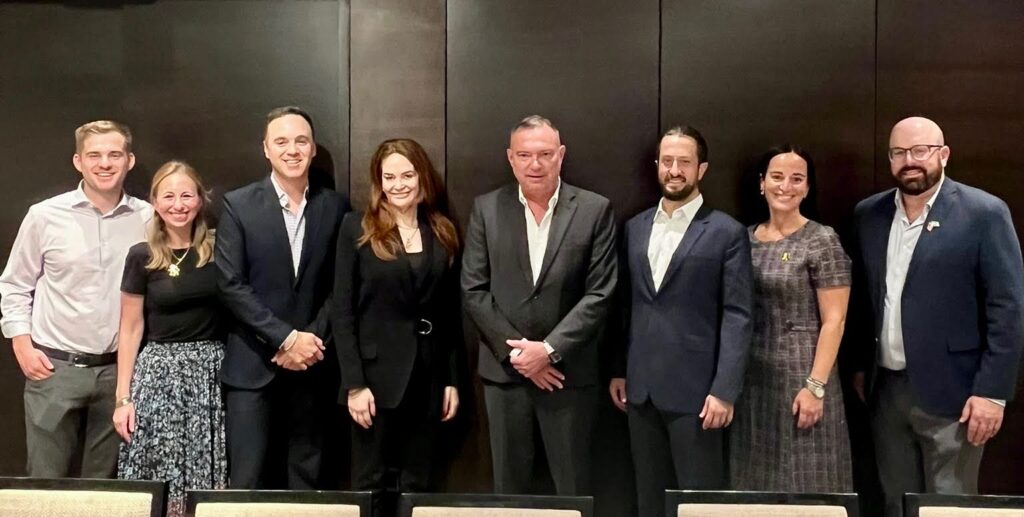
During the program, we engaged in meaningful conversations with senior leaders, including Maj. Gen. Doron Almog, Mark Wilf, Josh Schwarcz, and Yehuda Setton, who openly discussed the challenges and opportunities facing JAFI and the Jewish community. One session in particular stands out: I unexpectedly stepped up to the microphone and asked Mark Wilf direct questions about JAFI’s endowment structure and operations. Although it was nerve-wracking at first, I later felt a surprising sense of confidence and conviction. As a young leader, having the opportunity to ask questions openly and receive direct insights from senior leadership was both empowering and validating, reminding me that leadership involves curiosity and courage as much as titles or experience.
We also spent a day outside the conference rooms, traveling to Hurfesh, a Druze community in northern Israel, only 2 miles from the Lebanon border. Nearly 96% of its residents are Druze, making up part of the 26% of Israel’s population that is non-Jewish, yet they are intricately part of the country’s social and civic life. Although the Druze comprise less than 2% of Israel’s total population, they have made remarkable contributions in the military, politics, diplomacy, and the private sector. This was my first direct encounter with members of this proud community, and I was deeply moved by their loyalty to Israel and the sacrifices many have made for its security and safety.
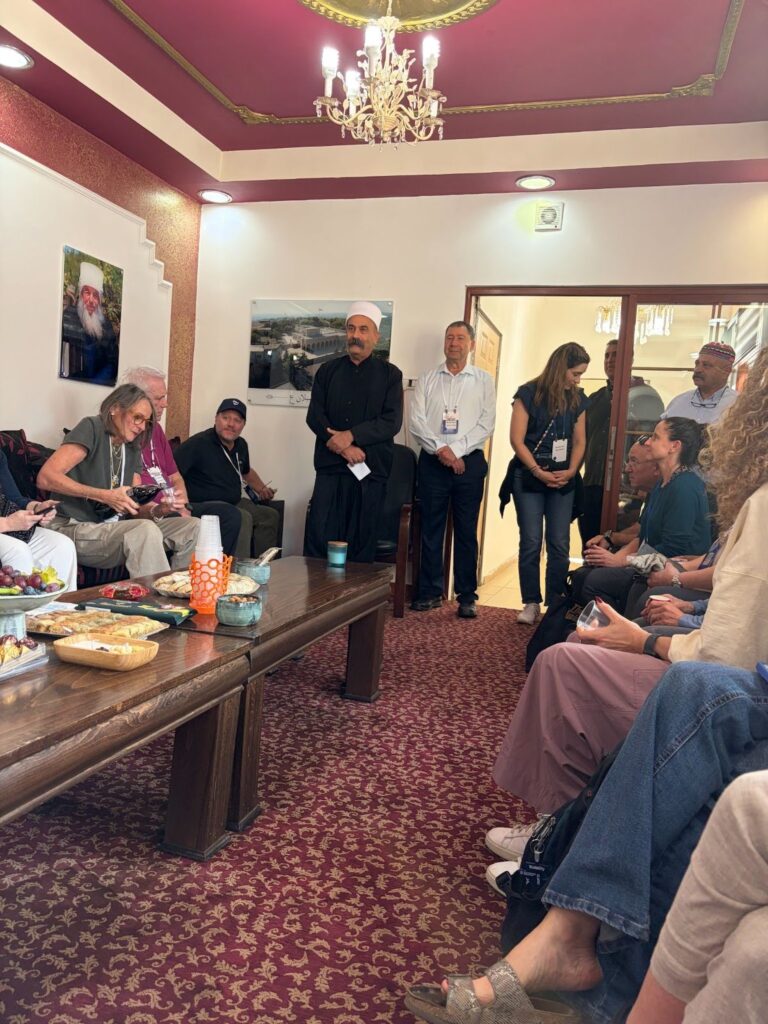
Meeting with the Druze community in Hurfresh
After an emotionally charged day, we ended at the Kotel, a profound emblem of history, resilience, and homecoming. Standing by the wall with notes of hope and peace in our hands, the city’s noise dimmed, allowing space for both sorrow and resolve to renew our commitment to our people, this incredible country, and our cherished traditions and faith.
The next day was equally enriching, filled with learning and meaningful connections. We started with an open discussion with MK Ohad Tal about government relations and the complex issues confronting Israel’s leadership today. Later, we met Ayelet Nahmias Verbin, Chair of JReady and The Jewish Agency’s Fund for Victims of Terror, whose work provides emergency aid, counseling, and long-term support, including job retraining, for individuals affected by terror. One of the most impactful moments was hearing Rabbi Peretz, father of Captain Daniel Peretz z”l, who heroically fell on October 7. His speech, rooted in faith, grief, and unwavering love for the Jewish people, left a profound mark, striking a balance between intense loss and steadfast commitment.
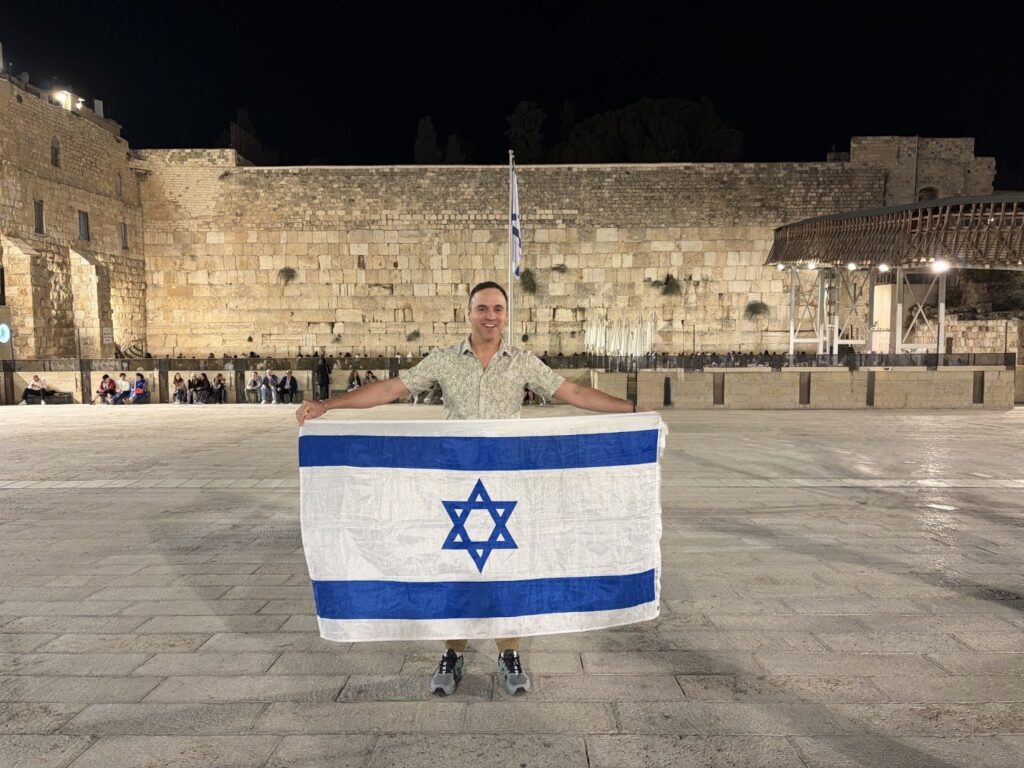
Ethan at the Kotel
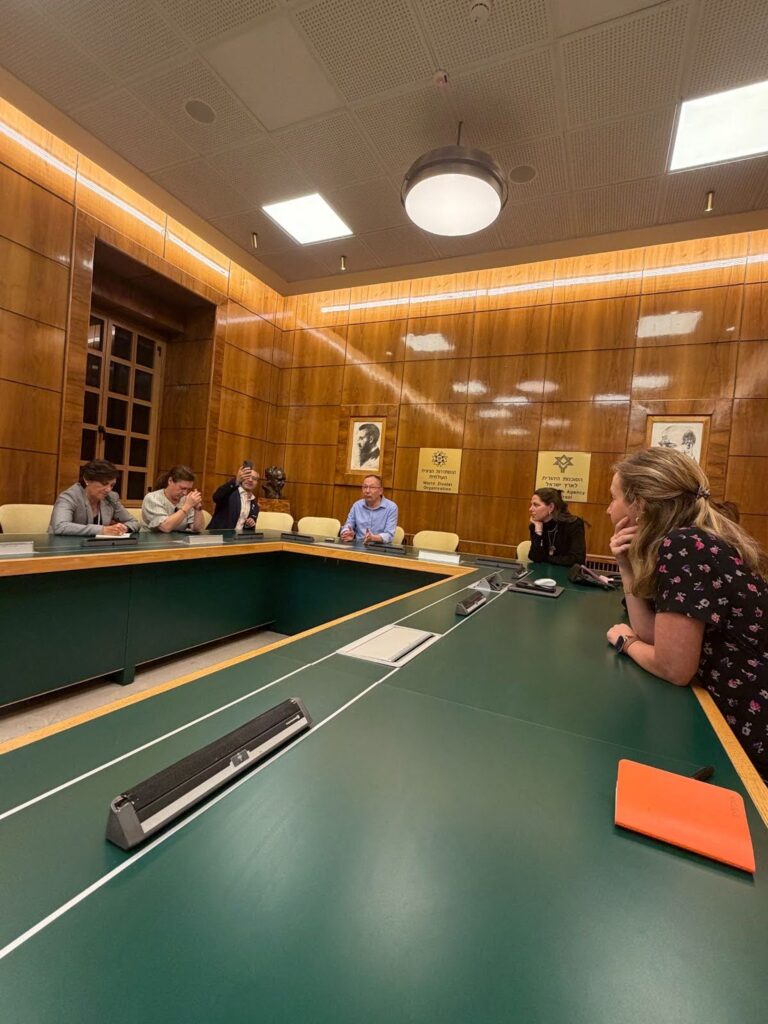
Meeting with JAFI staff in the boardroom at the JAFI headquarters in Jerusalem
We concluded the day at The Jewish Agency’s headquarters, in the historic boardroom where David Ben Gurion and later Golda Meir once debated Israel’s future and made decisions shaping the state and the Jewish world. I could almost see Golda, cigarette in hand, leaning over the table with her trademark combination of toughness and care for her people. Sitting in that room was a visceral reminder that JAFI’s mission—to strengthen the Jewish people and the State of Israel—is both historic and ongoing, linking generations of leaders in a shared narrative.
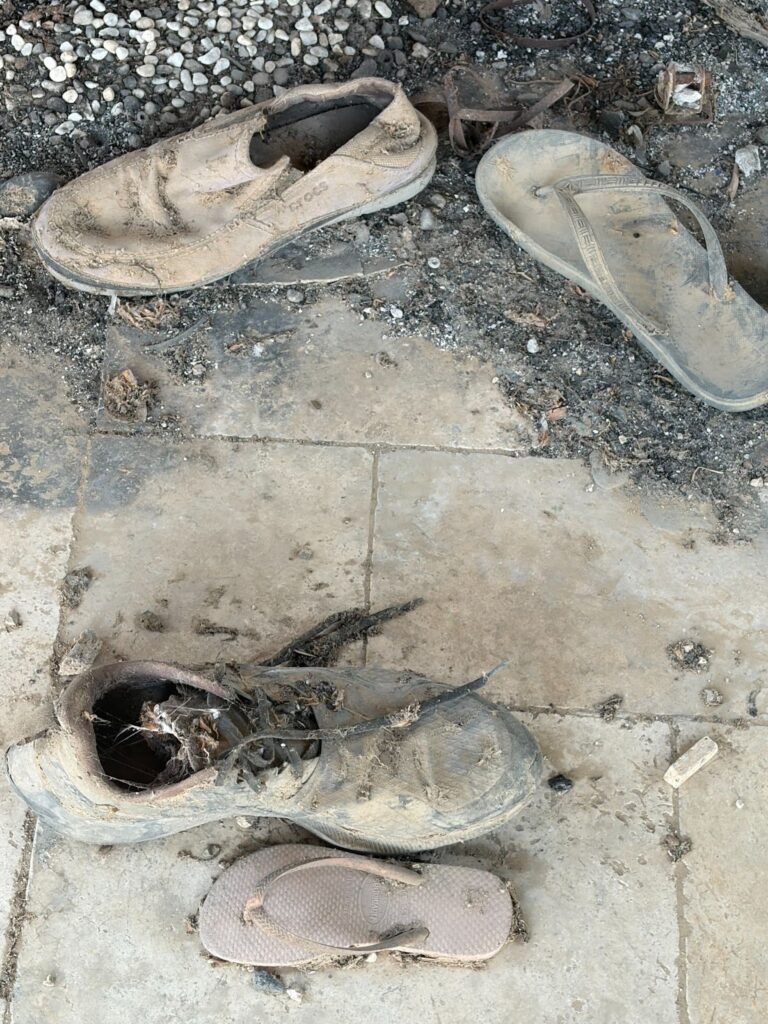
Visiting Kibbutz Be’eri in the south was one of the most heartbreaking and sacred moments of our journey. Every footstep felt heavy, the sound of clay roof tiles crunching beneath us, fragments that had fallen from homes burned to their foundations, in a community that has become a symbol of the October 7 massacre. The air is still heavy with the scent of smoke, mortar shell holes scarred kitchen floors, and pockmarks from bullets peppered the walls, marking where daily life had been violently interrupted. Stains of dried blood remained on broken floor tiles, silent, stubborn proof of the horror that had unfolded. Children’s coloring books, their edges singed and curling, sat open on kitchen tables beside melted crayons. A charred bunk bed, baseball cards still taped in a neat row, their corners blackened but visible. A child’s lone flip-flop lay in the dust, as if still waiting for its owner to come home, and on one porch, a half-crushed pack of cigarettes from a Hamas terrorist seemed to taunt the space with the knowledge that they had been there. Boxes of pasta and cereal in the pantry, time frozen between the ordinary and the unthinkable.
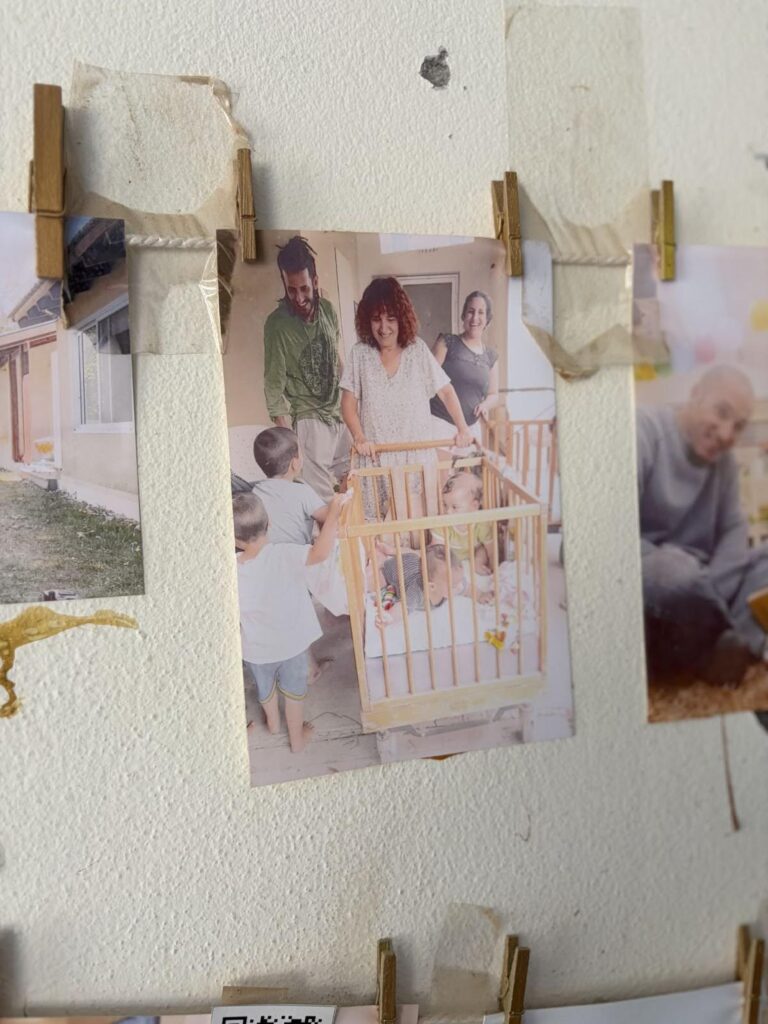
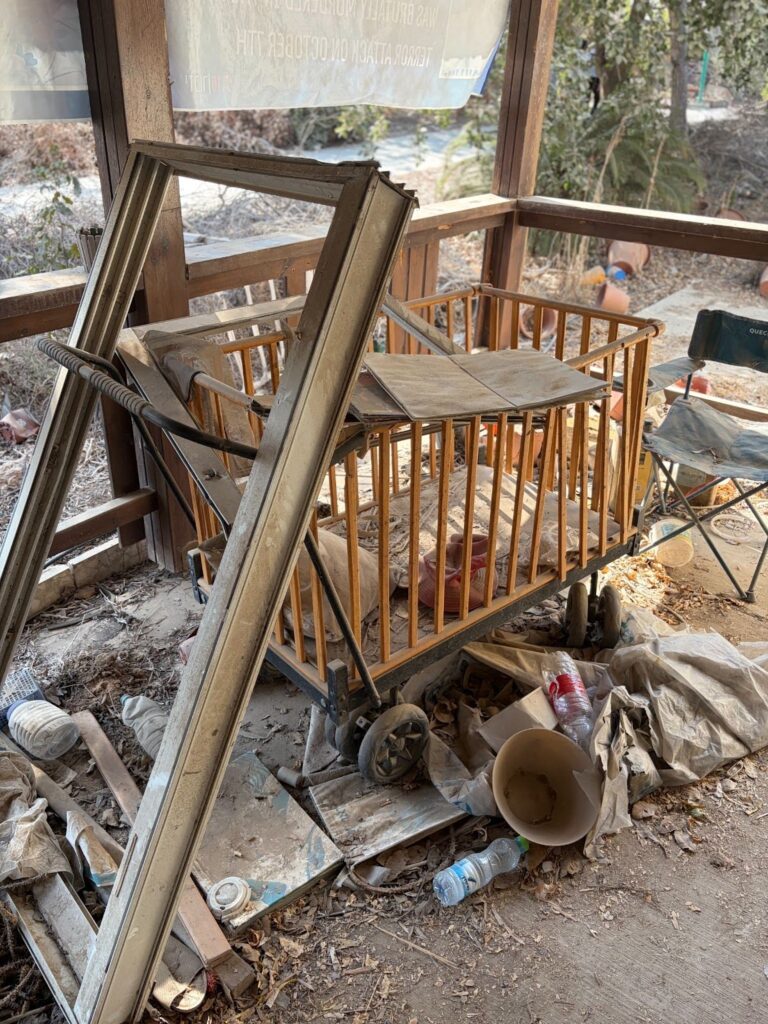
Kibbutz Be’eri resident, Maayan Bar and her husband, were murdered by Hamas on October 7. Here she plays with her grandchildren; what remains is now only the crib.
As Be’eri marks its 80th anniversary, it faces an almost impossible question: how does a community celebrate after so much loss, when 102 residents were murdered, and 32 were taken hostage in a single day? Our guide, Ori, shared memories of walking into Gaza as a child to swap hummus for watermelons, snapshots of a time when coexistence felt tangible, before later discovering, as a soldier, a terror tunnel beneath Be’eri’s dining hall large enough for a cargo truck. And still, Be’eri endures, pomegranate trees are being replanted, flowers are pushing through ash, and life insists on returning, so that renewal and grief now share the same soil.
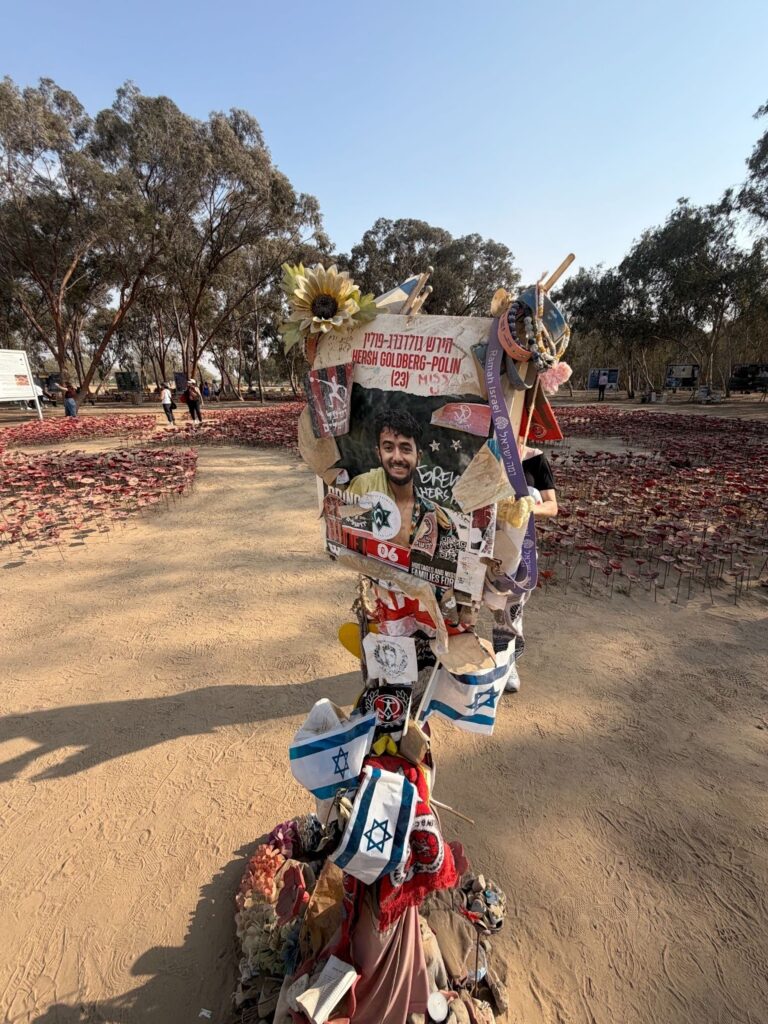
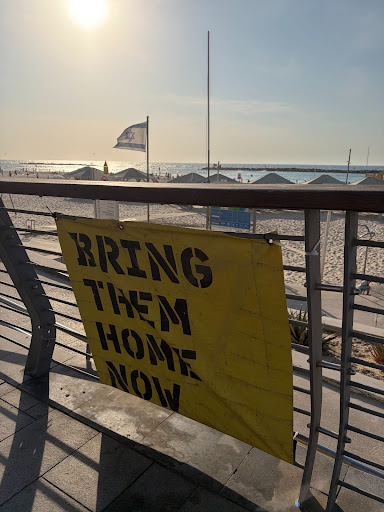
At the Nova festival site, the echoes of music and laughter seem to linger in the air, now transformed into a sacred soundtrack of mourning and love. Memorial installations there honor the hundreds of young people murdered on October 7, turning what was once a space of joy and love into a place of pilgrimage and remembrance. I searched for the name of a relative who was killed there, moving from sign to sign, but the sheer number of victims became overwhelming, a physical representation of the scale of loss. Eventually, I had to stop looking and walk back to the bus, carrying with me both the ache of not finding his name and the knowledge that each name, each face, is part of one shared story.
Even in that hollow silence, there was a fierce insistence on remembering and on choosing life, a collective refusal to let light be extinguished. That is the story of the Jewish people.
We wrapped up our visit with Youth Futures, a program for which Jewish Federation of Palm Beach County was one of the first investors and continues to lead with targeted philanthropy today. Youth Futures mentors at-risk children and their families by pairing each child with a professional mentor for approximately three years, supporting them at school, at home, and in the community to foster confidence, resilience, and a sense of belonging. During our visit, we met with one of the mentors and a mother whose lives have been profoundly impacted by this support. Palm Beach donors made it possible for this mentor to show up not only as a consistent source of guidance and encouragement for her child but also as an essential support for the mother, who was struggling to care for her other five children amidst the trauma. Without this critical intervention, her child would likely never have emerged from his room, spoken ever again, or made new friends after October 7.
It is a profound truth that our philanthropic dollars literally helped save this child’s life.
As a father of two young children myself, this visit was particularly moving on a deeply personal level, reinforcing the immediate and tangible impact such support can have on families grappling with unimaginable challenges. In a week filled with stories of trauma and courage, witnessing this ongoing, practical commitment to children and families felt like a hopeful glimpse of the future we strive to build. The work of Youth Futures embodies the core values of our global Jewish community—compassion, responsibility, and the unwavering belief that every child’s story matters, no matter where they were born or what challenges they have faced. Through philanthropy, partnership, and professional mentoring, Youth Futures changes lives one relationship at a time. That visit only reinforced how fortunate Matt and I are to have the love and support of so many around us, while so many others in Israel remain on waiting lists for their own mentor.
My experience in Israel, witnessing devastation, healing, strength, and renewal, transformed me in ways I am still trying to explain and understand. Standing in burned homes and silent fields, at memorials and in bustling boardrooms, I felt both the fragile nature of our Jewish world and the steadfast power of our people to come together for one another. The partnership between Jewish Federations and The Jewish Agency is more than just an institutional arrangement; it is a lifeline and a living expression of Klal Yisrael, the idea that wherever Jews are in pain or need, we share responsibility for one another.
Together, we act, we rebuild, and we commit to a Jewish future built on resilience, compassion, and hope. Am Yisrael Chai.